

From Manager to Leader
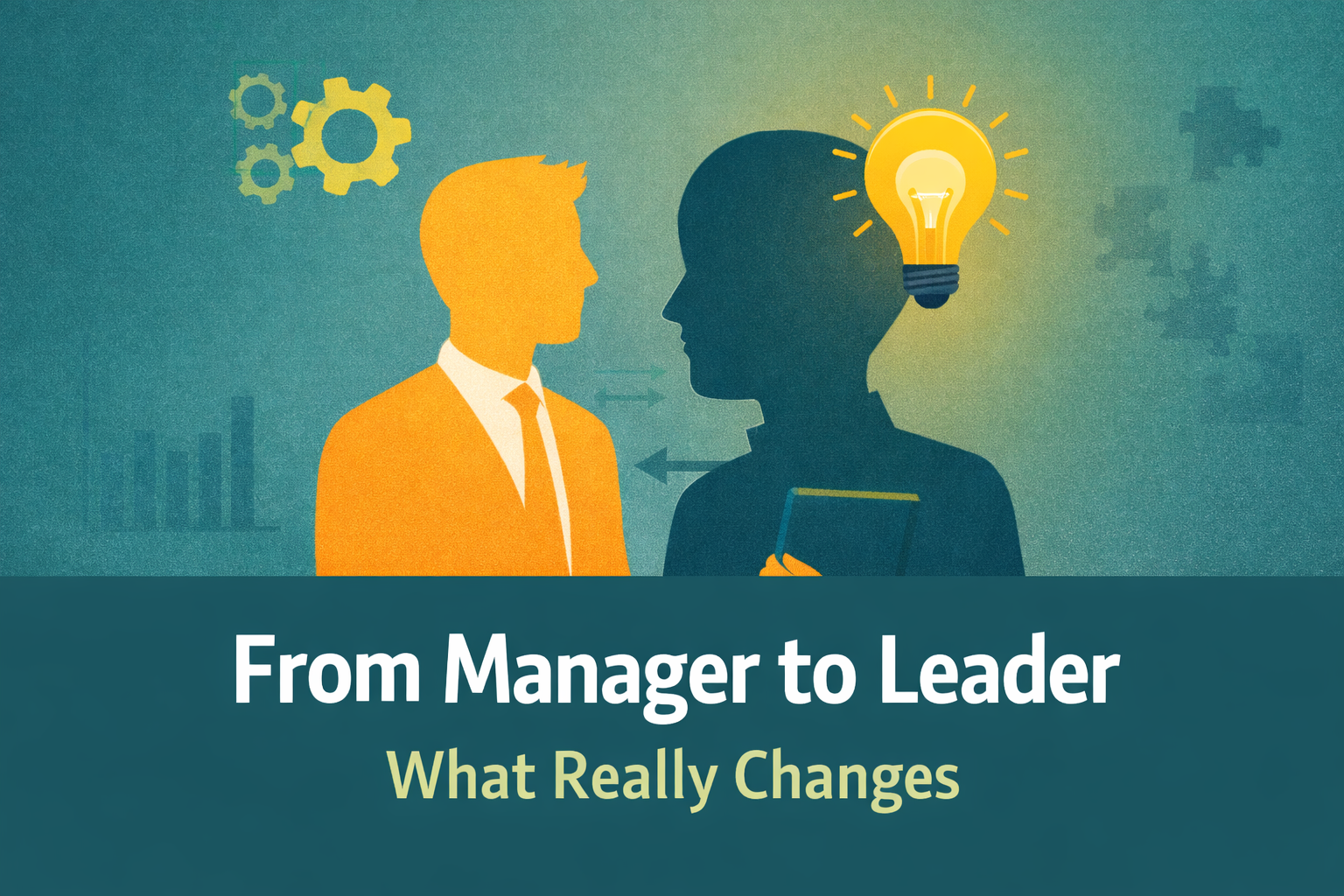
Most managers don’t struggle because they lack knowledge or competence. They struggle because what helped them manage tasks does not always help them lead people. The transition from manager to leader is often spoken about, but rarely understood in behavioural terms. It is not a promotion. It is not a title. It is a shift in how one thinks, responds, and shows up at work. This mindset is necessary. Organisations need clarity, order, and accountability. But on its own, it has limits.
Managing tasks is predictable.
Leading people is not.
What Actually Changes
Leadership begins when the focus moves from what needs to be done to who is doing it – and how they experience the work.
This shift includes:
Moving from control to trust
From providing answers to asking better questions
From personal efficiency to collective effectiveness
Leaders don’t remove responsibility. They create conditions where responsibility can be taken.

Leadership in Everyday Behaviour
In practice, leadership shows up in small, often unnoticed behaviours. It is reflected in how a leader listens without interrupting or rushing to fix, how consistently they show up, especially under pressure, and how willing they are to allow others the space to think, decide, and learn. Leadership is also evident in the ability to respond thoughtfully rather than react emotionally, even in challenging situations. These moments may seem ordinary, but over time they shape trust, confidence, and the quality of relationships at work.
Why the Shift Is Difficult
Because leadership requires looking inward before directing outward.
It challenges identity.
It exposes emotional habits.
It demands discomfort before confidence.
This is why many capable managers remain stuck, not due to a lack of skill but to a lack of self-awareness.
Reflection:
Leadership does not start when people report to you.
It starts when your presence changes how people think, feel, and act at work.
Consider:
How do people feel after interacting with me?
Do I rely more on authority or influence?
What behaviour do I model when things go wrong?
Leadership is not a role we step into – it is a behaviour we practise, every day.
Leave a Reply