

Why Authority Doesn’t Create Influence at Work
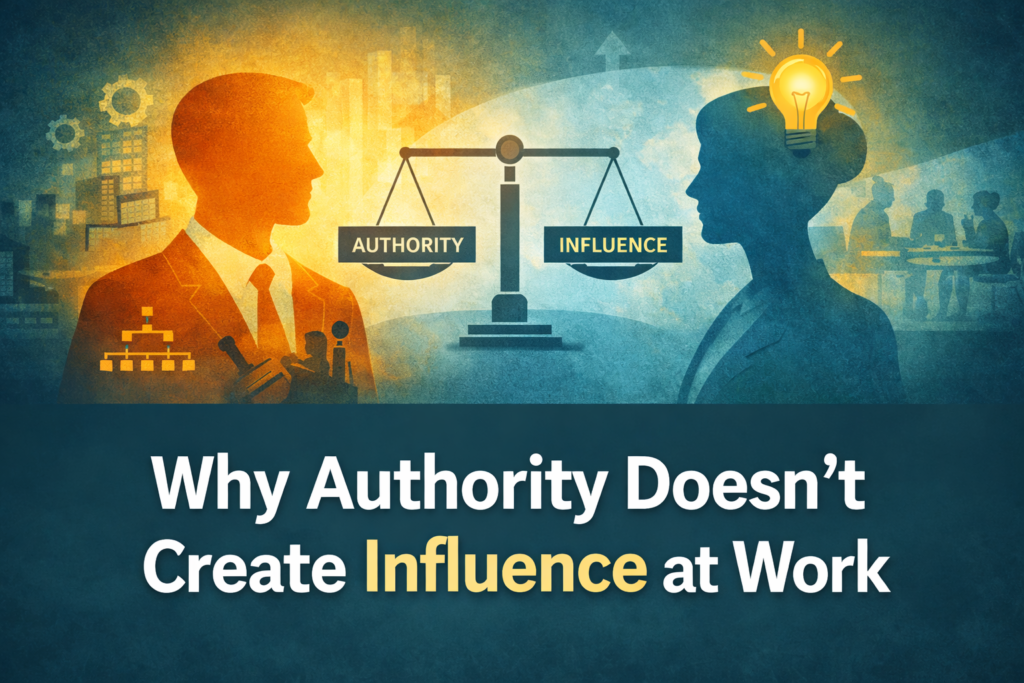
Authority can ensure compliance.
Influence creates commitment.
In many workplaces, the two are often confused.
A job title may grant decision-making power, but it does not automatically earn trust, respect, or engagement. While authority can direct behaviour in the short term, influence shapes how people think, feel, and choose to act, especially when no one is watching.
The Illusion of Authority
Authority works best in structured environments where rules are clear and outcomes are predictable. Instructions are followed, tasks are completed, and accountability is enforced.
However, modern workplaces are rarely this simple. They rely on collaboration, judgment, adaptability, and initiative – none of which can be demanded through authority alone.
When authority becomes the primary leadership tool, people may comply outwardly while disengaging inwardly. Feedback becomes filtered, initiative declines, and responsibility is reduced to obligation rather than ownership.
How Influence Is Actually Built
Influence is not granted; it is earned over time through behaviour. People are influenced by leaders who are consistent, emotionally regulated, and respectful, regardless of hierarchy. Influence grows when leaders mean what they say, listen without defensiveness, and create an environment where it feels safe to speak honestly. These behaviours are often subtle, but their impact is significant. Influence is felt long before it is formally acknowledged.
The Emotional Layer of Leadership
People do not respond only to instructions. They respond to tone, timing, and emotional signals. Leaders who manage their own emotions effectively create stability in uncertain situations. They reduce fear, encourage openness, and enable meaningful dialogue. This emotional discipline is rarely visible, yet it strongly shapes workplace behaviour.
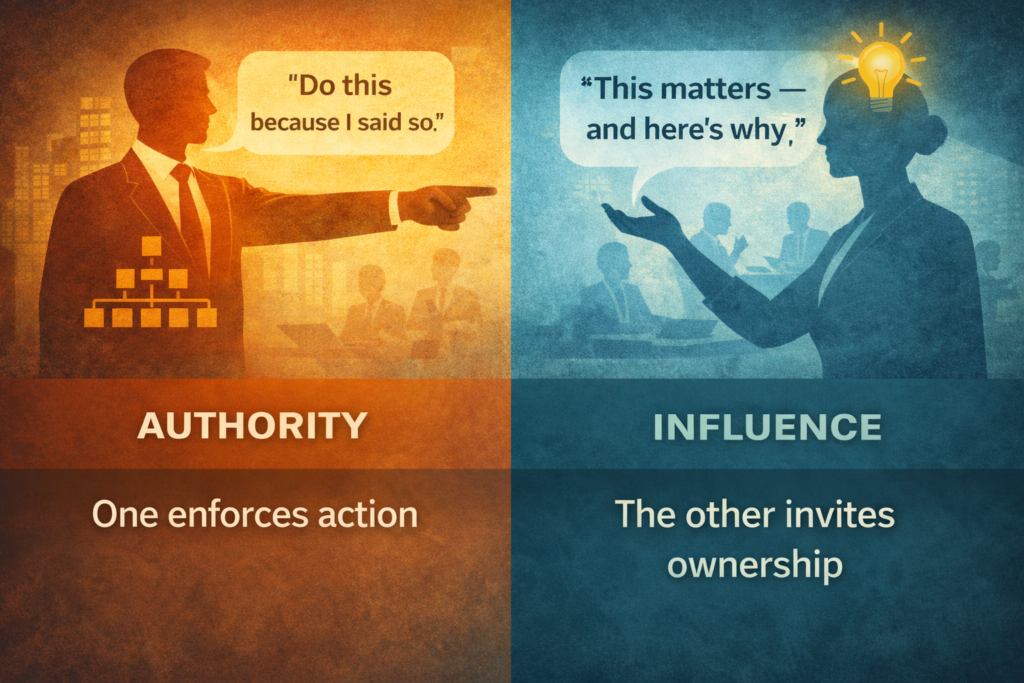
“Authority may control actions. Influence shapes commitment”.
Consider: Ask Yourself
Do people bring problems to me, or do they avoid difficult conversations?
How safe do others feel expressing disagreement?
Is my leadership creating compliance or commitment?
Leadership is not about the power you hold, but the trust you build.
Leave a Reply